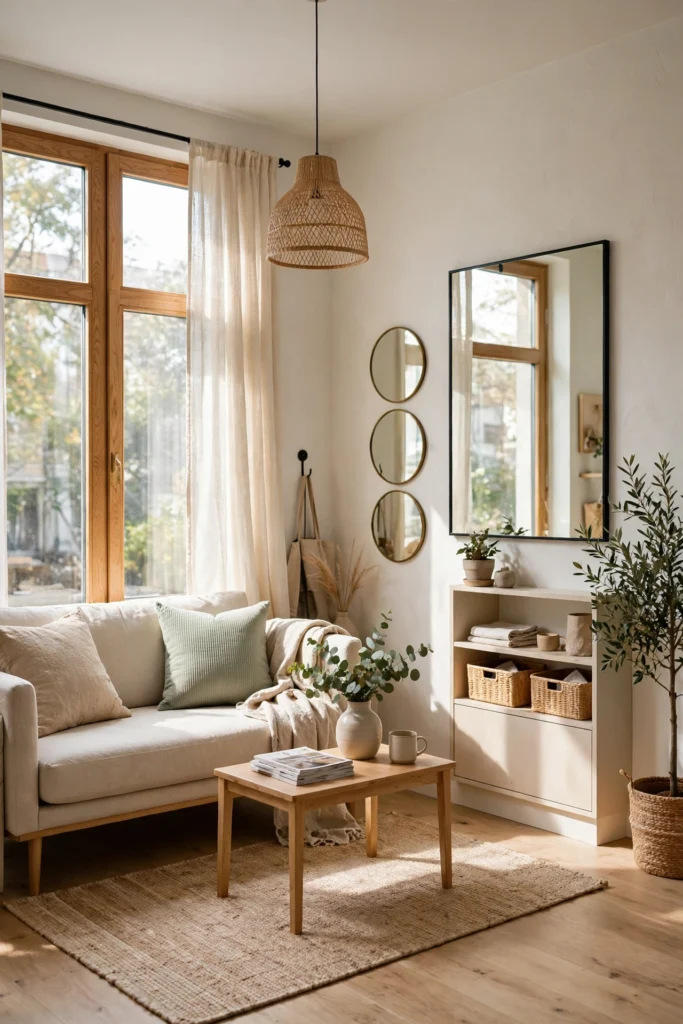
A small living room can feel cozy rather than cramped with the right ideas. Light colors, smart furniture, and clever layouts make even the tiniest space feel open and inviting. You do not need more square footage, just better choices about what goes where.
In this guide, you will find sixteen small living room ideas that open up tight spaces. Each idea is practical, affordable, and proven to work in real apartments and small homes. Pick the ones that fit your room and enjoy a living space that feels much larger.
1. Light-Colored Walls
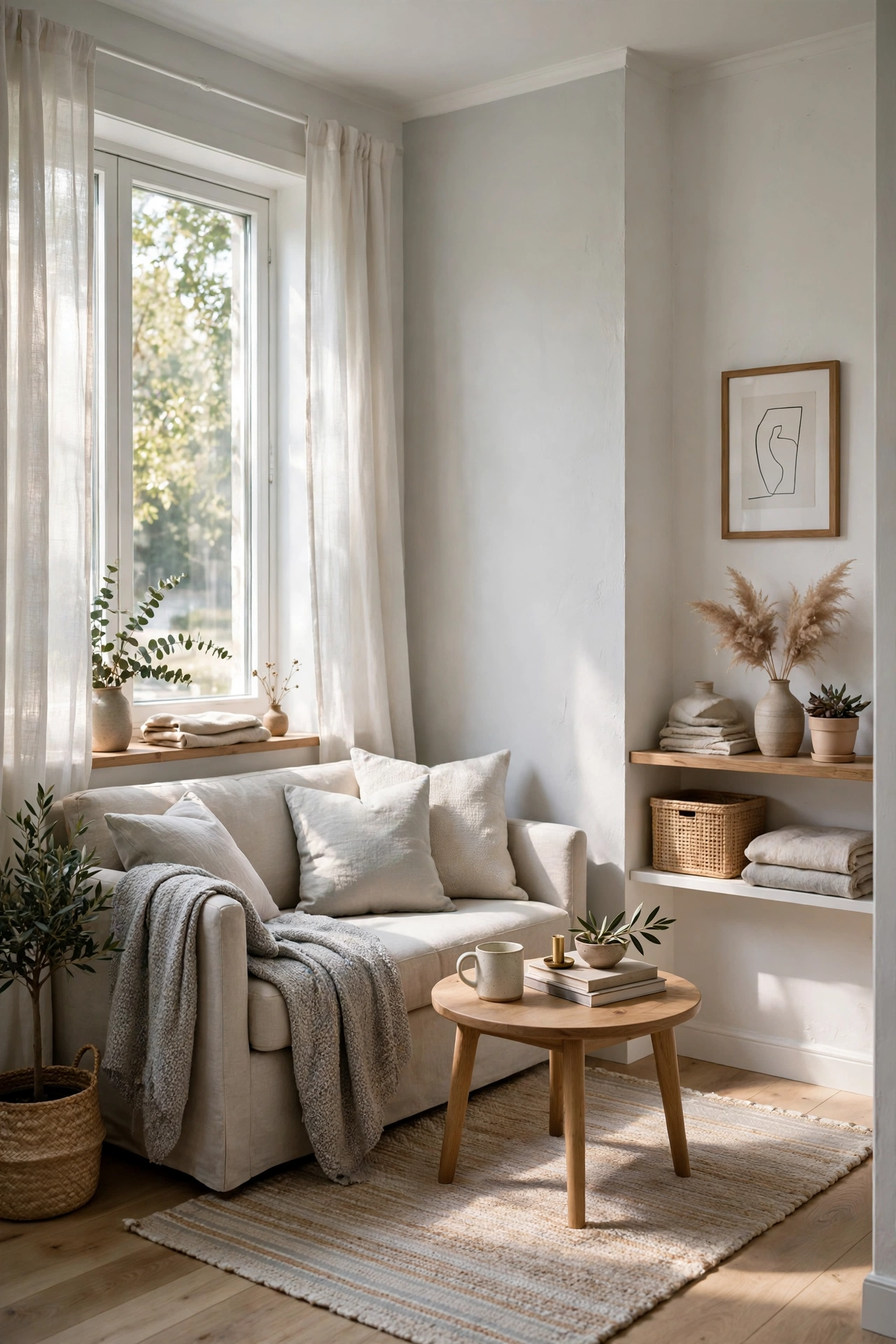
Light-colored walls are the simplest way to make a small living room feel bigger. White, pale gray, and soft beige reflect light around the room instead of absorbing it, so the walls seem to recede. The whole space instantly feels brighter, airier, and more open.
Paint all the walls in one light color for a seamless look, and carry the same shade onto the ceiling so the room feels taller. If all-white feels flat, add warmth with wooden furniture and textured cushions rather than dark paint. A light backdrop also lets your furniture and art stand out beautifully.
2. Mirror Magic

Mirrors are a classic trick for small living rooms because they double the visual space. A large mirror reflects light and the room itself, making the walls seem to disappear. Placed opposite a window, a mirror also bounces daylight deep into the room.
Choose one large mirror rather than several small ones, and hang it at eye level where it reflects something pleasant, like a window or a plant. A leaning floor mirror works well in rentals since it needs no drilling. Avoid placing mirrors where they reflect clutter, since they double whatever they show.
3. Multi-Functional Furniture

In a small living room, every piece of furniture should earn its place twice. A sofa bed hosts guests, an ottoman with storage hides blankets, and a coffee table with shelves holds books and remotes. Multi-functional furniture cuts clutter while keeping everything you need within reach.
Look for pieces that change function easily, like a console that extends into a dining table or nesting tables that tuck away. Measure carefully before buying, and choose furniture that fits the room’s scale. One well-chosen multi-use piece can replace two or three single-purpose ones.
4. Floating Shelves

Floating shelves add storage without eating floor space, which is gold in a small living room. Mounted on the wall, they hold books, plants, and decor while keeping the floor clear and the room feeling open. They also draw the eye upward, making the ceiling feel higher.
Install two or three shelves in a vertical row or a staggered pattern, and keep them lightly styled with breathing room between items. Anchor the shelves into wall studs so they hold real weight safely. Floating shelves work best above a sofa or beside the television, where they use otherwise dead wall space.
5. Glass Coffee Table

A glass coffee table visually disappears, which makes a small living room feel less crowded. Unlike a solid wooden table, glass lets your eye travel through it to the rug and floor beyond, so the room feels more continuous. It is a simple swap with a big visual payoff.
Choose a table with a slim metal or wooden frame and a clear glass top, sized to leave walking room on all sides. Keep the surface mostly clear, with just one or two items, so the see-through effect stays. Tempered glass is strong and safe, and it wipes clean in seconds.
6. Vertical Storage

Small living rooms usually have more wall height than floor space, so vertical storage is the smart move. Tall, narrow bookcases and wall-mounted cabinets use the height of the room while leaving the floor open. The room feels organized without feeling filled.
Choose one tall unit rather than several short ones, and run it close to the ceiling for maximum storage. Keep heavier items low and lighter decor up high, and leave some shelves partly empty so the unit does not feel heavy. Vertical storage also makes a small room feel taller and more intentional.
7. Slim Sofa

A bulky sofa can swallow a small living room whole, while a slim sofa leaves room to breathe. Sofas with narrow arms, raised legs, and a low back take up less visual and physical space, and the visible floor beneath them makes the room feel larger. Comfort does not have to mean bulk.
Measure your room and leave at least thirty inches of walking space around the sofa. Choose a sofa with legs rather than a skirted base, since visible floor adds lightness. A loveseat or apartment-size sofa often fits a small room better than a full three-seater, with room left for a chair.
8. Area Rug to Define Space
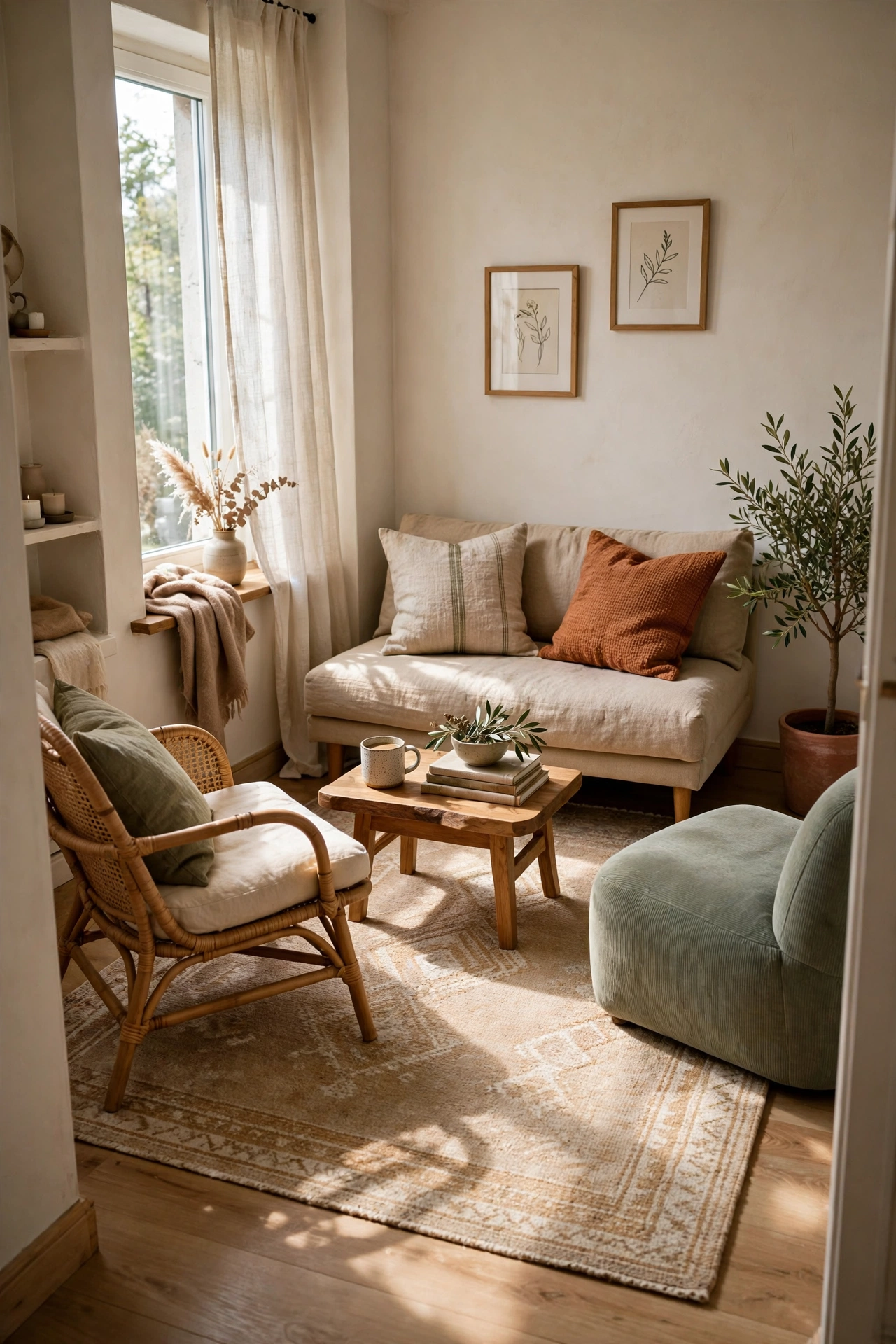
An area rug defines the living zone in a small room, especially in open-plan apartments. It anchors the sofa and chairs into one intentional grouping, making the space feel designed rather than random. A rug also adds warmth and texture underfoot.
Choose a rug large enough that the front legs of the sofa and chairs sit on it, since a too-small rug makes the room feel choppy. Light colors and simple patterns keep the space feeling open, while a bold border can frame the seating area nicely. A flat-weave rug is easier to clean and keeps the room feeling light.
9. Curtains Hung High

Hanging curtains high and wide makes windows look larger and ceilings taller. When the rod sits near the ceiling and extends past the window frame, the eye reads the whole wall as window, and the room feels grander. It is a five-minute change with a dramatic effect.
Mount the rod four to six inches above the window frame and six to twelve inches wider on each side. Choose light, flowing fabric that lets daylight through, and let the curtains fall to the floor for a finished look. Sheer curtains keep privacy while maximizing the light that makes small rooms feel open.
10. Foldable Furniture
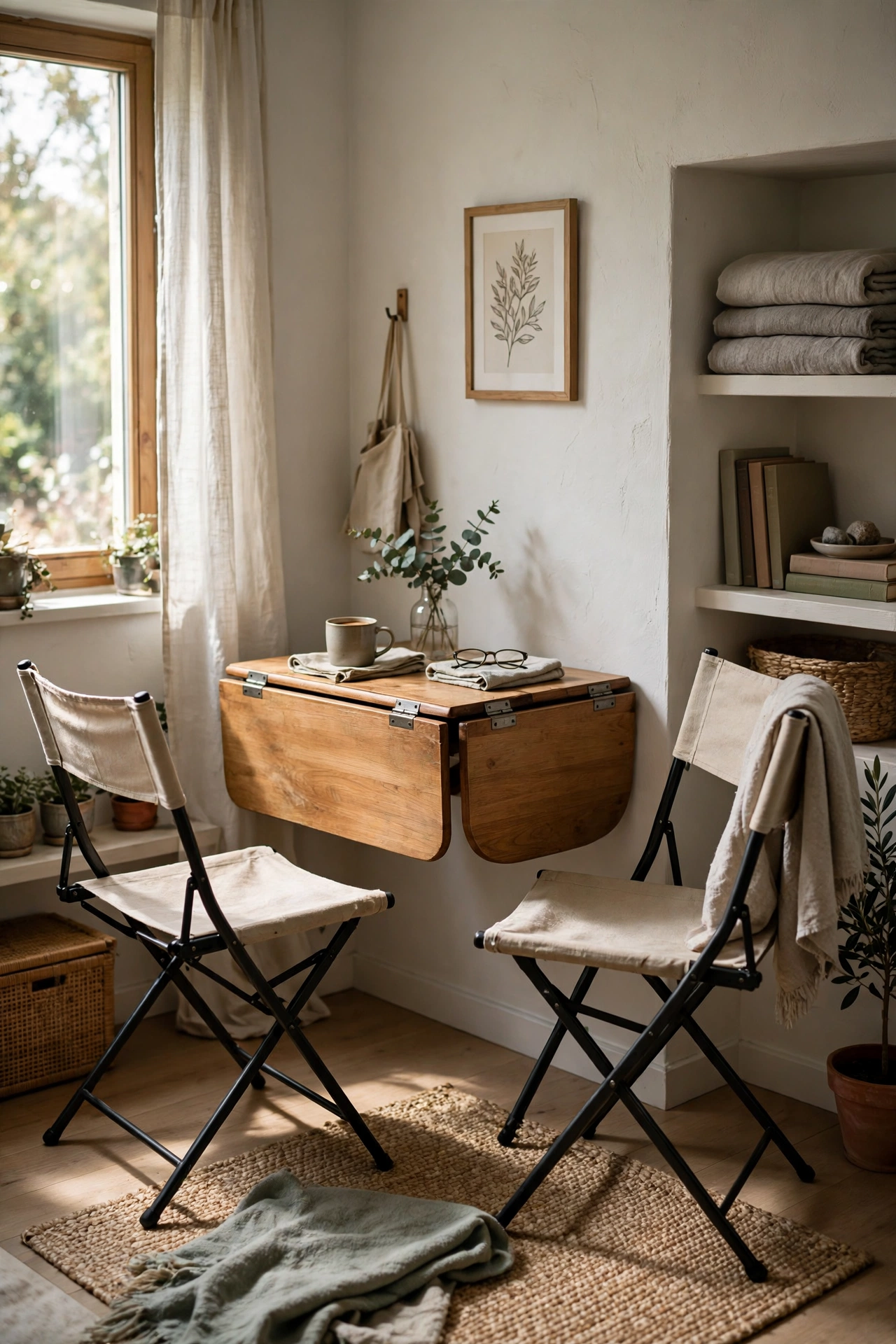
Foldable furniture gives a small living room flexibility that fixed pieces cannot. Folding chairs, a drop-leaf table, and stackable stools appear when guests arrive and disappear when they leave. The room stays open for daily life and expands only when needed.
Choose folding pieces that look good enough to leave out, like wooden folding chairs or a sleek wall-mounted drop-leaf table. Store folded items behind a door or under a bed so they are easy to grab. Foldable furniture is especially useful in studio apartments, where one room serves many purposes.
11. Corner Seating
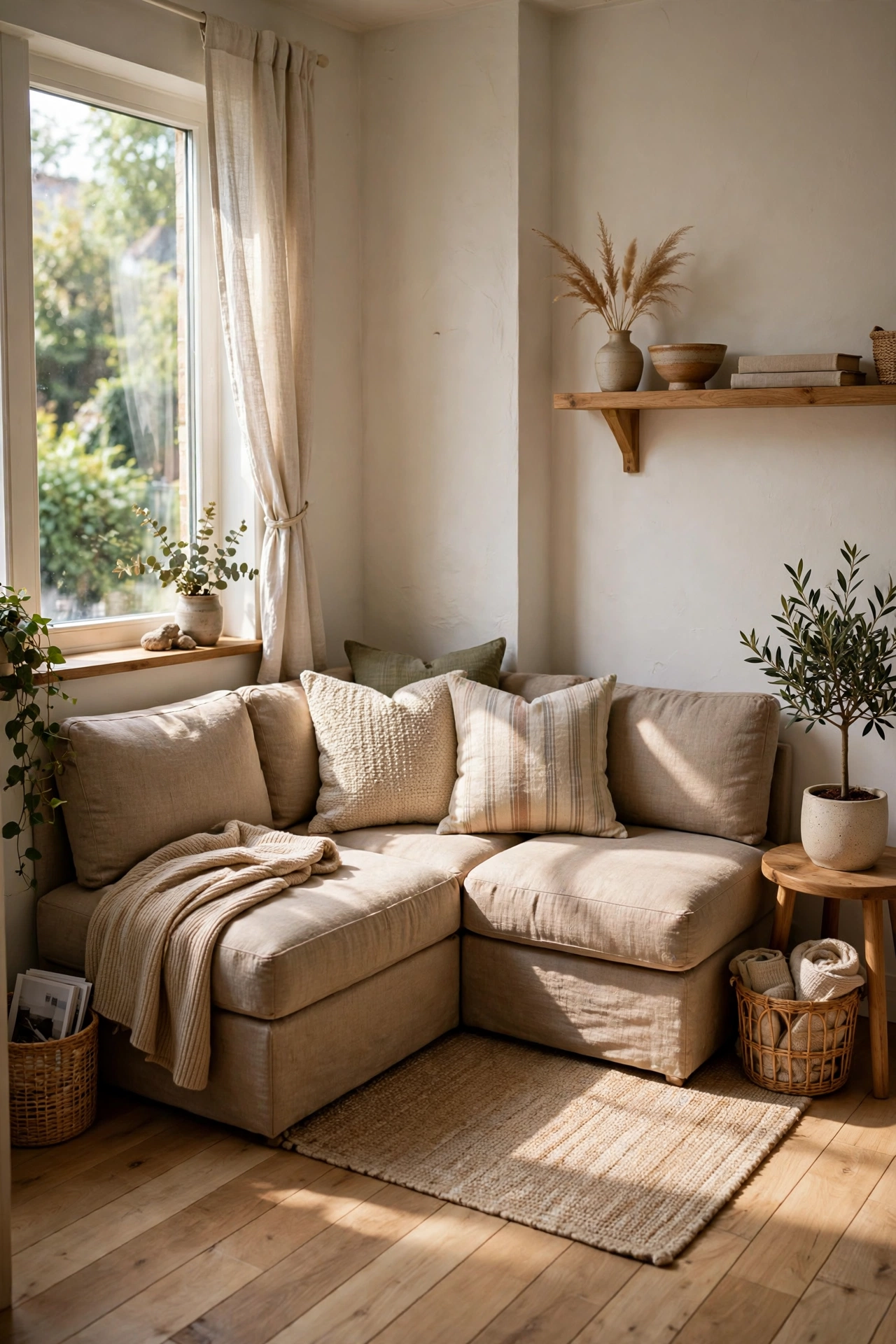
Corners are often wasted in small living rooms, but corner seating turns them into the coziest spot in the room. An L-shaped sectional or a corner chair arrangement uses the corner fully, seating more people in less floor space. It also creates a natural, intimate conversation zone.
Choose a compact sectional with a chaise rather than a bulky corner unit, and leave the opposite corner open for balance. Add a small side table and a floor lamp to make the corner inviting. Corner seating works especially well in square rooms, where it frees the center for movement.
12. Minimal Decor
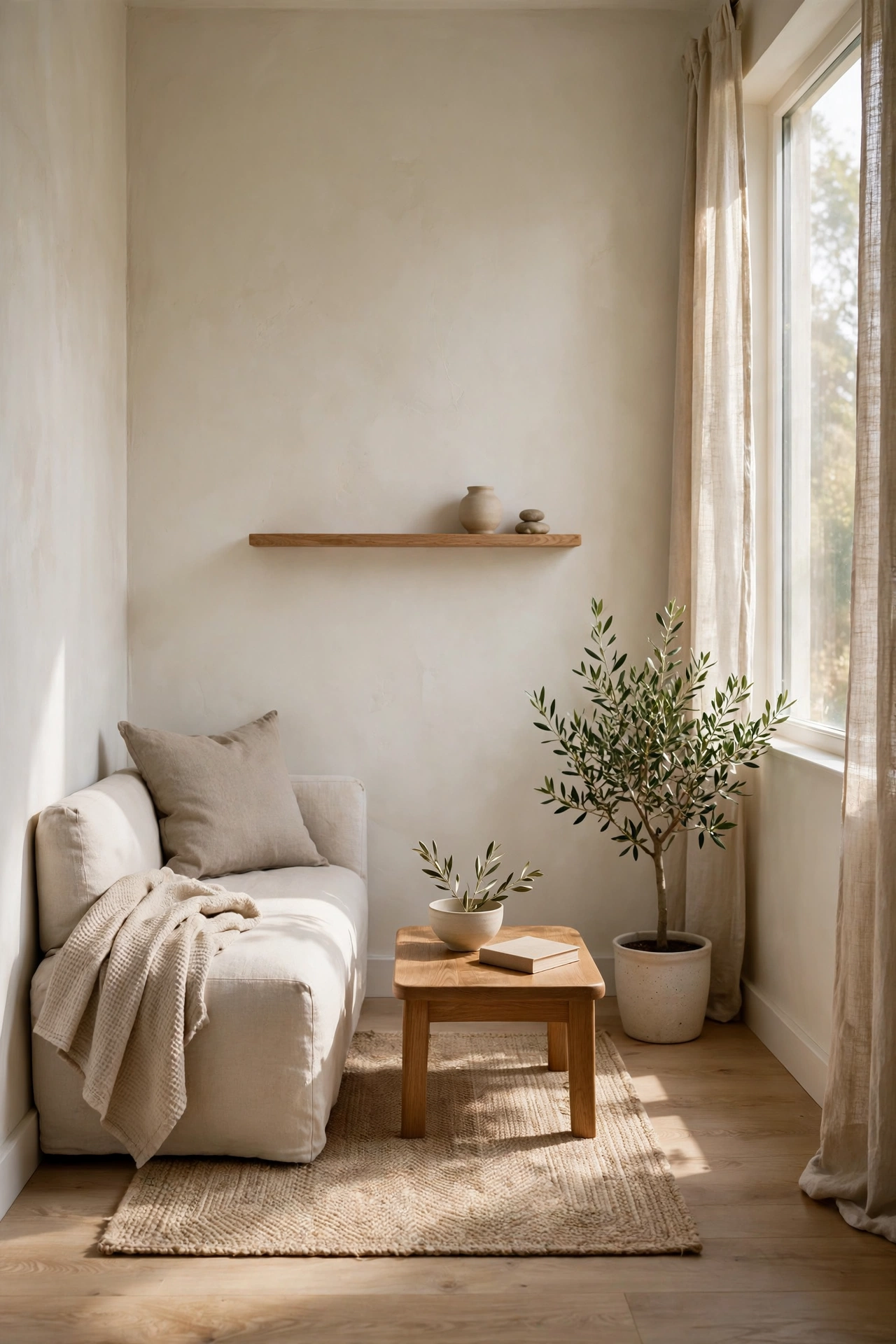
Minimal decor is not about empty rooms, but about choosing fewer, better pieces. In a small living room, every extra object adds visual noise, so editing down to the items you truly love makes the room feel calm and spacious. Less clutter means more breathing room.
Keep surfaces mostly clear and display one or two meaningful pieces per shelf rather than a crowd. Choose decor with a purpose, like a beautiful throw or a plant, and rotate seasonal items instead of adding more. A regular edit, removing one item each month, keeps the room feeling fresh and open.
13. Open Layout
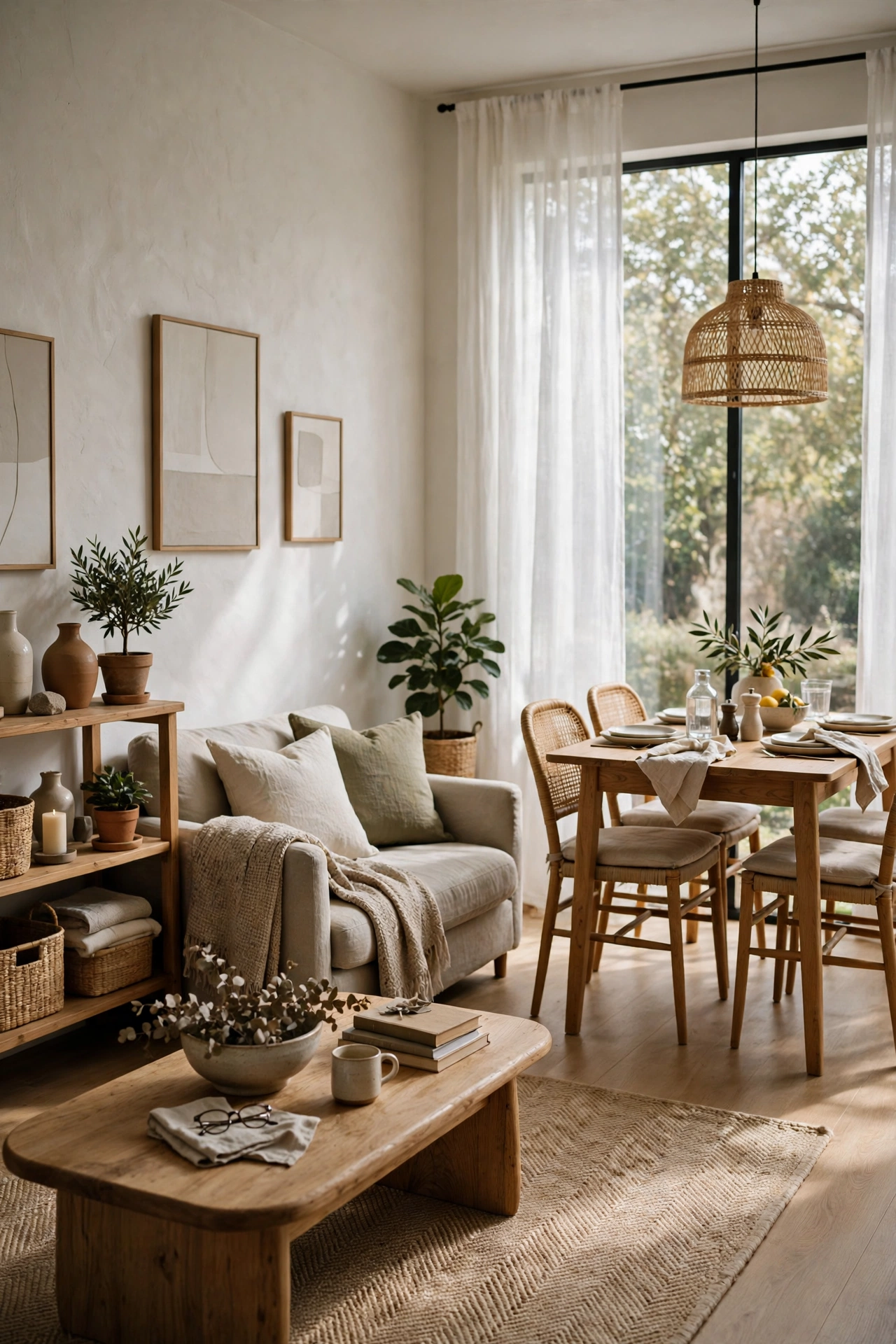
An open layout removes visual barriers between the living room and neighboring spaces, making the whole home feel larger. Without bulky dividers, light flows freely and sightlines stretch further. Even a small apartment feels generous when rooms connect, and daily life feels easier when spaces flow together.
Use rugs, lighting, and furniture placement to define zones instead of walls or tall bookcases. Keep sightlines clear from the sofa to the farthest window, and avoid furniture that blocks doorways. If you need separation, a low console or sheer curtain divides space without closing it off.
14. Statement Lighting

Statement lighting draws the eye upward and adds personality without taking floor space. A pendant light, a sculptural floor lamp, or a cluster of wall sconces makes a small living room feel designed and intentional. Good lighting also makes the room feel warm and inviting at night.
Choose one statement piece as the focal point, like a pendant over the coffee table, and support it with smaller lights for layers. Use warm bulbs and dimmers so the room can shift from bright daytime to cozy evening. Lighting that hangs or mounts on walls saves precious floor and table space.
15. Plants for Freshness

Plants bring life and freshness to a small living room without cluttering it. A tall plant in a corner draws the eye up, trailing plants soften shelves, and small pots add color to tables. Greenery makes any room feel more alive and welcoming.
Choose plants that match your light, like pothos for low light or fiddle-leaf fig for bright windows. Use hanging planters and wall-mounted pots to save floor space, and keep plant care simple with a watering routine. Even two or three well-placed plants transform how a small room feels.
16. Hidden Storage
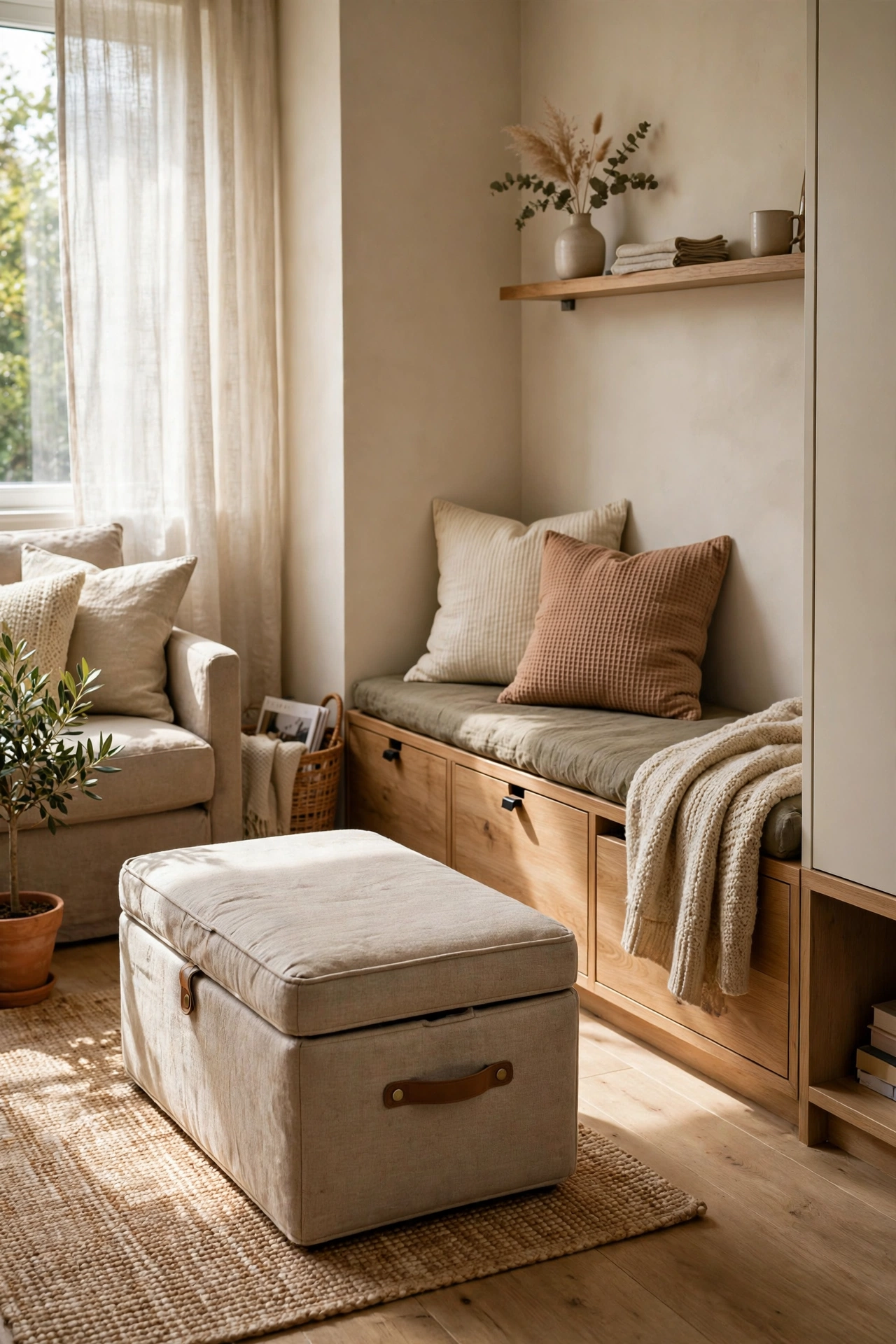
Hidden storage keeps a small living room tidy without visible clutter. Ottomans with lids, benches with compartments, and coffee tables with drawers hide remotes, blankets, and games while looking like ordinary furniture. The room stays clean because everything has an invisible home.
Invest in one or two hidden-storage pieces for the items that usually pile up, and keep them near where those items are used. A storage ottoman beside the sofa holds throws, while a bench by the door hides shoes. Hidden storage is the final touch that makes a small living room feel calm and spacious.
Conclusion
A small living room feels bigger when every choice serves space and light. Light walls, slim furniture, mirrors, and hidden storage each add a little openness, and together they transform a tight room into one that feels generous. The best small rooms are not empty, they are edited.
Start with one idea from this guide today. Whether it is curtains hung high, a glass coffee table, or a simple declutter, that single change will make your living room feel larger. Explore more decorating inspiration as you go, and enjoy a small space that lives big.


